


While the West has begun to recognize the artistic skill that comes from Africa, many lingering colonial-created stereotypes continue to frame Africa as ahistorical and exotic, which is especially detrimental to African woman. Today, many female African artists who have lived and worked in the Diaspora challenge these fictional, oppressive perceptions of their various African countries and their bodies through their art. Here are five women artists from the diaspora you should definitely know more about.
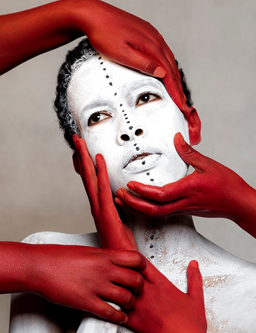
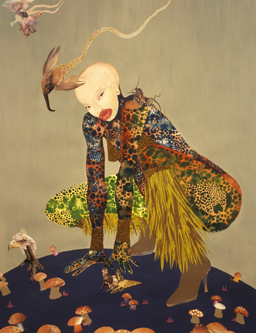
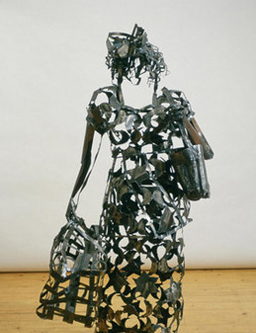
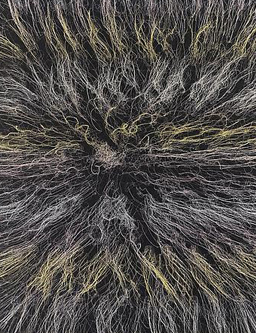
Wangechi Mutu was born in Nairobi, Kenya, and spent her undergraduate career in Wales at Cooper Union, before immigrating to the United States, where she earned her MFA from Yale. Today, she lives and works in New York. From a young age Mutu was exposed to how the Western world oversimplified Kenya to be a nameless part of the larger Africannca, made up of Safari and traditional ‘tribes’.
Ghada Amer was born in Cairo and received her MFA in Painting from Villa Arson EPIAR in 1989. Although Amer describes herself primarily as a painter, her work spans and combines multiple mediums. Most notably, she uses embroidery and gardening, labor that is typically categorized as domestic and feminine and often deemed hobbies rather than art. In fusing the accepted fine art medium of paint with these ‘feminine activities’ along with her often erotic depictions of the female body, Amer challenges the notions of the feminine versus masculine, of desire and love.
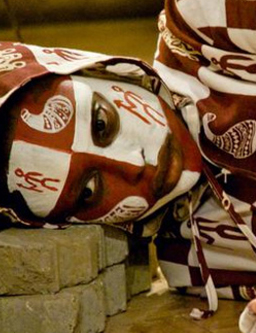
Malinda is a performance artist who grew up in The Netherlands, The United States, and Kenya. Although she grew up away from her nation, many of her performances work within a Kenyan or broader African context. Many her pieces look at post-colonial politics within the country, such as Mshoga Mpya (The New Gay in Kiswahili) (2014), which reacts to the illegalization of homosexuality in Kenya.
Camp is a prolific Nigerian sculptor from Buguma who studied at the California College of Arts and Crafts in Oakland, Central School of Art and Design, and the Royal College of Art in London, where she currently resides. Her sculptures often depict Kalabari (the town from which Douglas Camp comes) masquerades, spirits, or priestesses. Made of steel and other found materials such as cans, rope, and feathers, connects herself and represents her roots in these figures.
Aida Muluneh is a photographer and founder of DESTA (Developing and Educating Societies through the Arts) in Addis Ababa, a non-profit organization that focuses on photography workshops and exhibitions. Muluneh believes that Africans should document and show their own realities. She was born in Ethiopia but spent her adolescence in places such as Yemen, England, Cyprus, and Canada. Abroad she was impacted by the images of Ethiopian famine that were pervasive throughout the West.

Ataa Oko and Kudjo Affutu with Oko's red coq coffin 2009

CAAM Courtyard Series: Metaphors - Charles Dickson

Exploring Mystical Islam: The Artwork Of Maïmouna Guerresi

Sanaa Culture | Kenya's Creative Arts Hub Art
