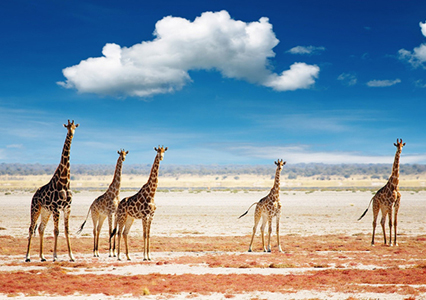
Botswana is the stomping ground of safari guide, naturalist, botanist and archaeologist Ralph Bousfield. He explores the country's otherworldly Makgadikgadi Pans and luxury lodges with Lisa Grainger.
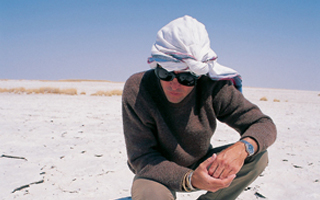
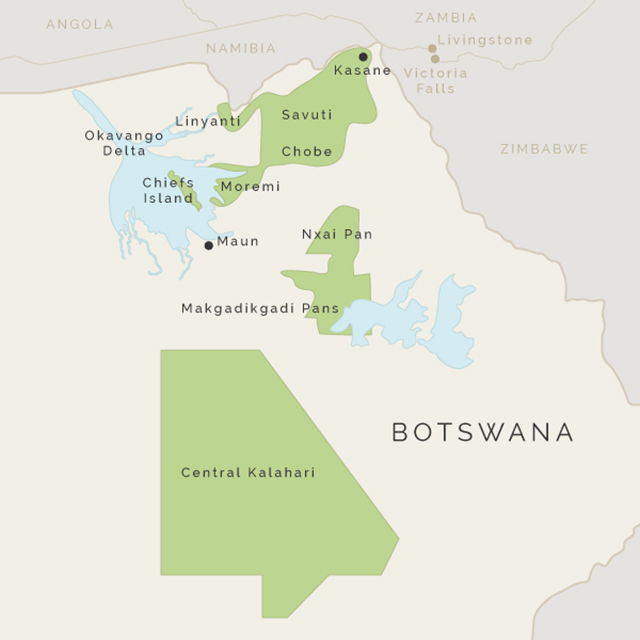
Flying in a tiny Cessna over the Makgadikgadi Pans – the world’s biggest salt flats , in the centre of Botswana – is an odd experience. Through the cockpit windscreen, the view is so extensive I can see the curvature of the earth, the outline which delineates our round, solid planet from the ever-darkening blue of outer space. On the far side of the desert, a great pipe of white dust spirals into the atmosphere like a giant straw of sherbet. Below, in the midday sun, the salt-encrusted pans twinkle, our plane’s fly-like shadow the only sign that we are in fact on Earth – and that man exists here at all.
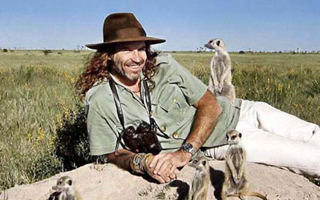
The experience of soaring above such an other-worldly part of our planet is made more surreal by the company I am keeping. My expedition through Botswana is with Ralph Bousfield , the co-owner of Jack’s Camp and San Camp, and one of Africa’s most experienced guides, who in 1990 was so badly injured in an air crash that doctors weren’t sure he would live. The pilot was his father, Jack, listed in the Guinness Book of Records for the dubious distinction of having hunted 53,000 crocodiles. When a cable snapped and the plane plummeted into the bush, Ralph was so burnt trying to extract his fatally-injured father from the wreckage that he spent two years in hospital in a protective pressure suit.
Everything but his face was fried. Surgeons were able to construct new ligaments in one arm and rebuild the palm of a hand from skin on his buttock, but his upper body and feet were so damaged in the fire that he can never expose them to the sun again or go without shoes.
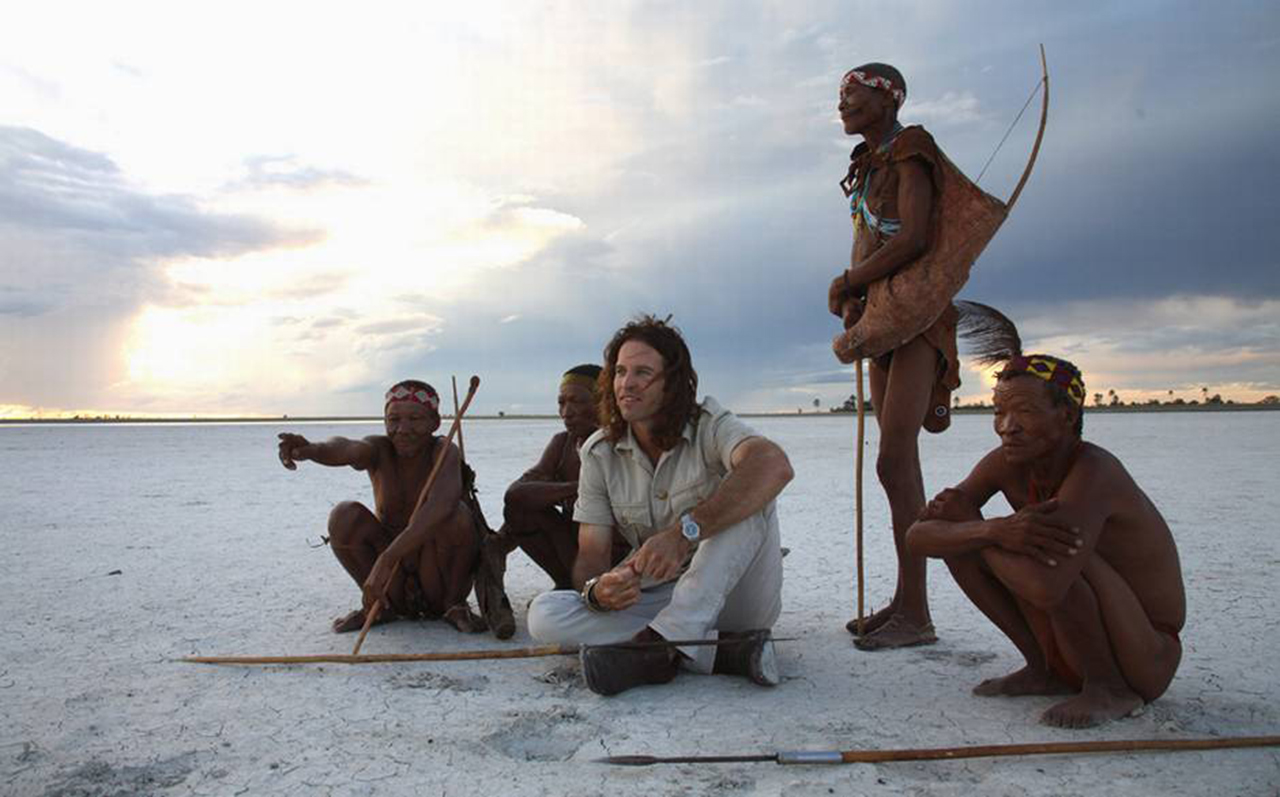
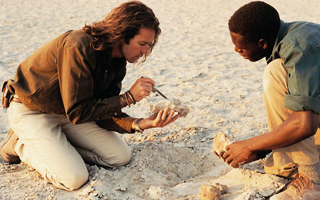
That he survived is both a medical miracle and a blessing to those who love the bush and Africa. Jack Bousfield brought Ralph up to be not just a keen naturalist (he found a hippo fossil from the Pleistocene era when he was 14, to the delight of the Smithsonian Institution ) and botanist (he can tell you more about the prickly hoodia xerophyte than you might care to know) but an ethnographer who regularly talks at Harvard. From early childhood, he was surrounded by Zu/’hoasi Bushmen, speaking their complicated click-based language, and learning from them how to hunt.
To experience these communities with someone who knows them intimately is the main reason for going to his camps. A small group of Bushmen live nearby, and it is with them that guests can walk into the desert, discovering extraordinary uses for ordinary-looking plants (the Kalahari sand raisin bush to make bows, rare blood-red bulbs to treat upset stomachs) or learn how to hunt or squeeze water out of a desert melon.