

With colourful make-up of bright yellows, startling whites and rich earth-reds, flamboyant accessories and extraordinarily elaborate decorations, you'd be forgiven for thinking that the designs in these images originated in the fevered mind of some leading fashionista. Yet far from the catwalks of New York, London or Paris, these looks are the sole creation of the Surma and Mursi tribes of East Africa's Omo Valley. Inspired by the wild trees, exotic flowers and lush vegetation of the area bordering Ethiopia, Kenya and Sudan, these tribal people have created looks that put the most outlandish creations of Western catwalk couturiers to shame.


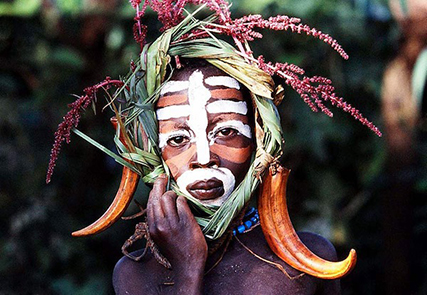
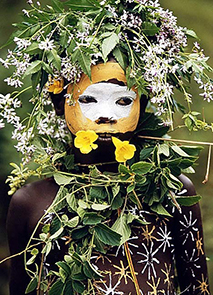
Inspired by the exotic flowers, trees and vegetation of the land bordering Ethiopia, Kenya and Sudan, these designs are the creations of the Surma tribes of the Omo Valley in East Africa. Leaves and roots are transformed into accessories, necklaces of banana leaves are scarves, grasses, feathers and flowers are their fascinators. Zebra skins are leggings, snail shells make jewelry and clay is used to stick the creations together – an entire wardrobe provided by Mother Nature. Since the scope of recorded history, fifteen tribes have lived in the region.


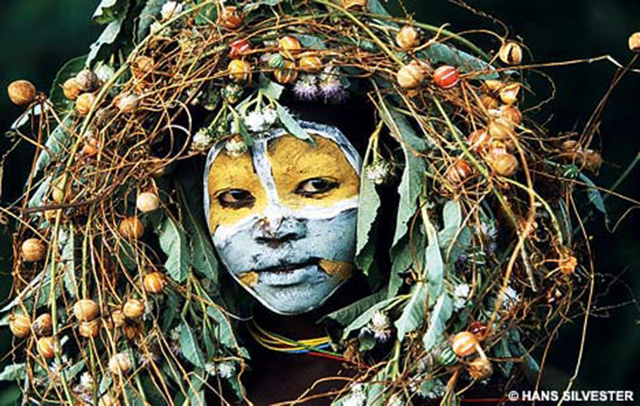
“They can take any material from the plant world – leaf, stem, flower, grass, root – and instantly transform it into an accessory straight from a fairy tale, without the slightest tinge of absurdity,” he said when his book was launched in 2008. Accompanied by a driver, cook and guide, Silvester spent month-long stays with the isolated tribes. He says several times a day, all members of the tribe decorate themselves. “They take a stone from a river bank, where they usually hold painting sessions, and they turn it into a palette,” he said.
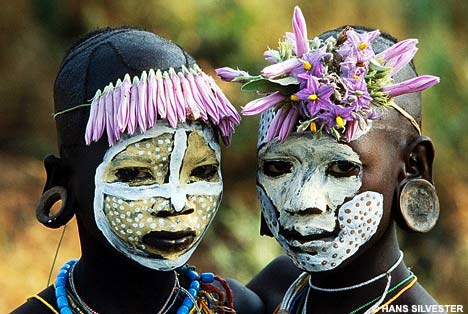
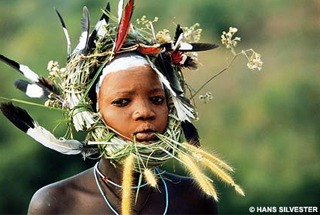
Although the origins of this astonishing tradition have been lost over the years - the Surma and Mursi spend much of their time involved in tribal and guerilla warfare - their homeland is a hotbed of the arms and ivory trades. Fifteen tribes have lived in this region since time immemorial, and many use zebra skins for leggings, snail shells for necklaces and clay to stick their wonderful designs to their heads.


